

Mediterranean Planting
For sunny, dry gardens — texture, scent and resilient planting
Mediterranean planting works beautifully in open, sunny gardens where light reaches the ground for much of the day, particularly where soils are poorer, free-draining or naturally dry.
Rather than fighting these conditions, we use them as the starting point for the garden. Taking inspiration from pioneers such as Beth Chatto and her Gravel Garden, alongside the work of John Little at Hilldrop, we embrace crushed aggregates, rubble and low-fertility soils instead of automatically enriching the ground.
These seemingly difficult conditions can become the foundation for remarkably rich and resilient planting.
Creating a Mediterranean garden
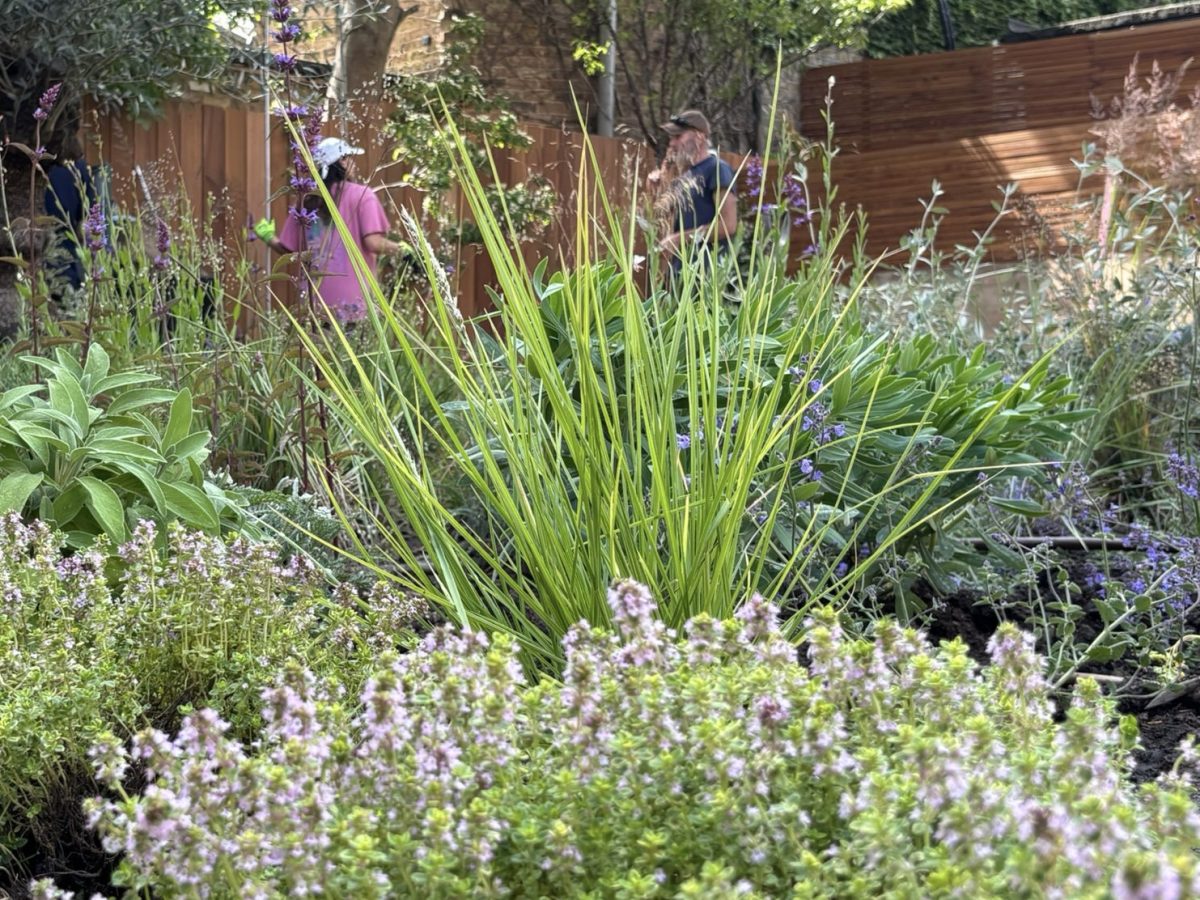
Large architectural plants and small trees such as olives, false olives and loquats can create the bones of the garden, bringing structure and presence throughout the year. Around them, we build generous layers of flowering perennials, aromatic plants, ornamental grasses, ground covers and wildlife-friendly wildflowers that thrive in sunny, free-draining conditions.
The aim isn’t to recreate a Mediterranean garden in London. Instead, we take inspiration from the plants, landscapes and ecology of warmer climates and interpret them for the particular conditions of each garden.
Designing with dry, free-draining soils
Gravel, stone, rubble and crushed aggregates can all play a role within the planting. As well as creating the free-draining conditions many Mediterranean and drought-tolerant plants prefer, these materials create small niches and habitats for insects and other wildlife.
Working this way allows us to create diverse plant communities without relying on rich soils, excessive irrigation or unnecessary soil improvement.
Mediterranean planting in London gardens
London contains its own collection of microclimates. Sheltered gardens, south-facing walls and sunny, open spaces can create warm, dry conditions in which Mediterranean-inspired and drought-tolerant planting can thrive. Designed around the right plants and the existing conditions, these gardens can be resilient, wildlife-rich and full of interest throughout the seasons.
The result is our idea of the cultivated wild: open, warm and sensory. A garden filled with texture, scent, movement and flowers that can evoke memories of warmer landscapes while still feeling completely at home in London.
It is about understanding what a place naturally wants to become — and designing with those conditions, rather than against them.
WHAT COULD YOUR GARDEN BECOME?
Got a sunny, dry garden?
Tell us about its conditions and discover what could flourish there.